
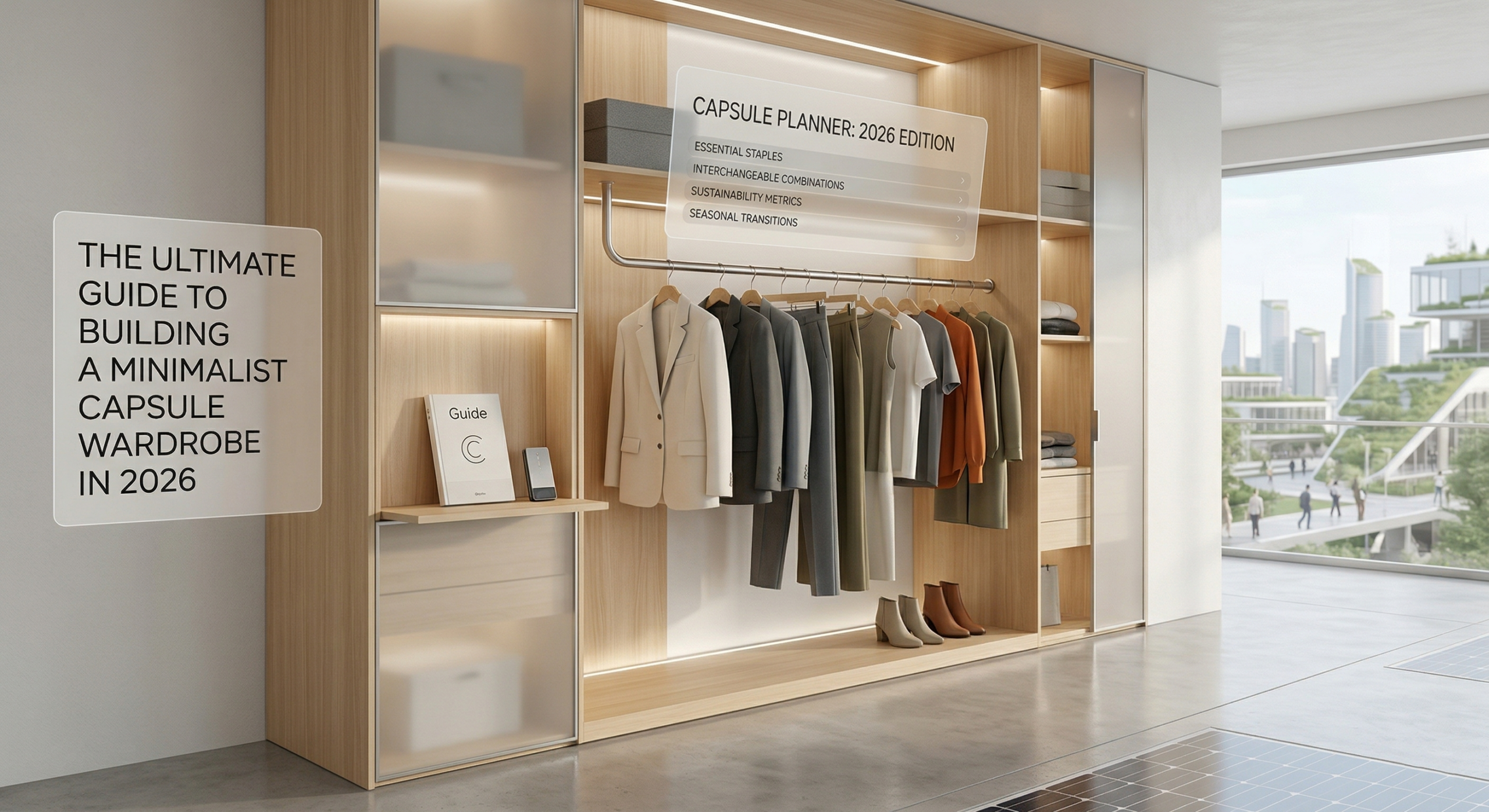
Building a capsule wardrobe in 2026 is no longer just a minimalist aesthetic; it is a vital survival strategy for the modern working professional. Let’s face it: the daily grind is demanding enough without starting your morning engaged in a frustrating battle with a chaotic, overflowing closet. If you find yourself staring at racks of clothing yet feeling like you have absolutely nothing to wear, you are suffering from decision fatigue. This guide is your ultimate solution. We will help you cut through the clutter, reclaim your mornings, and curate a highly functional closet that ensures you look effortlessly put together every single day.
The 7:00 AM Meltdown (And How We Fix It)
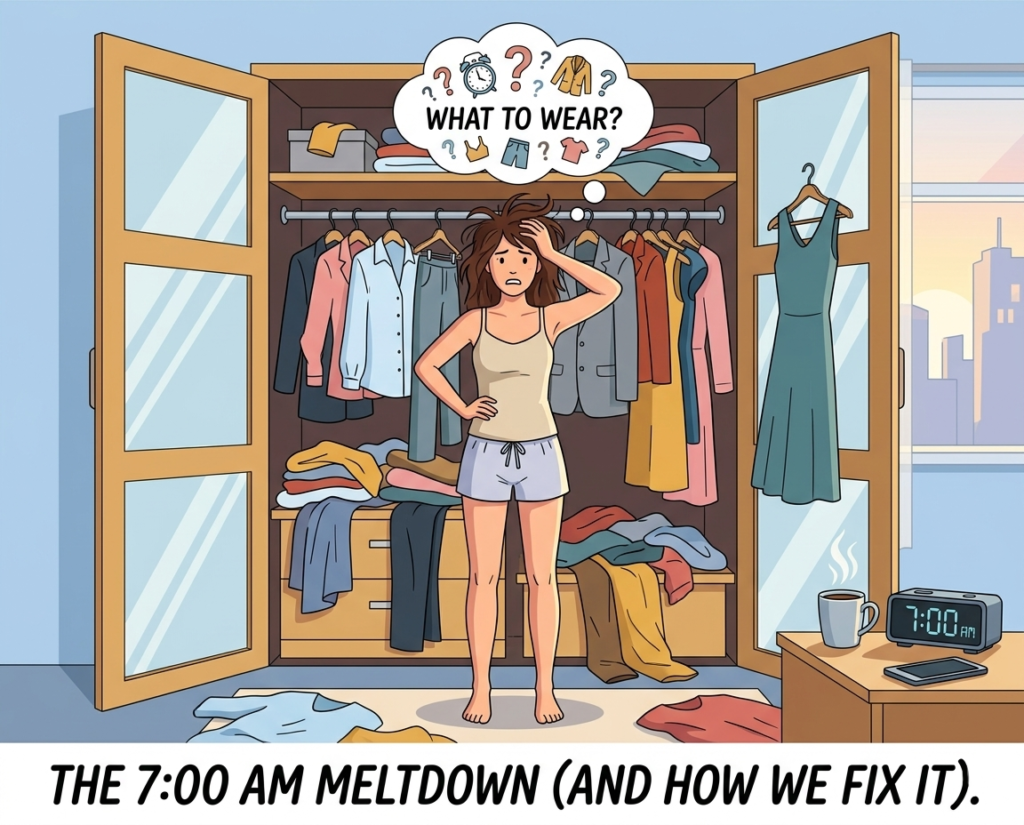
We have all been there. It is 7:00 AM on a Tuesday, your alarm went off twenty minutes ago, and you are staring into a closet packed so tight the hangers are practically fighting each other.
Yet, as you aggressively shuffle through ten pairs of pants and fifteen tops, the age-old battle cry escapes your lips: “I literally have nothing to wear.” It is frustrating, it drains your energy before you have even had your morning coffee, and honestly, it is exhausting. You spend hard-earned money on clothes, but still end up wearing the same black pants and slightly-faded sweater every single week.
Enter the solution: the modern Capsule Wardrobe.
By paring down your closet to a curated selection of highly versatile, deeply loved items, you reclaim your mornings, your budget, and your sanity. If you are tired of the daily outfit struggle, this is your complete, no-nonsense manual for reclaiming your mornings
Why 2026 is the Year to Downsize Your Closet
Let’s be real. Between commuting, working a grueling schedule, and trying to maintain a semblance of a social life, nobody has the time or energy to be their own full-time stylist. In 2026, the cultural shift is moving rapidly away from ultra-fast fashion and hyper-specific micro-trends.
Working professionals are realizing that a stuffed closet does not equal good style. It equals decision fatigue. A capsule wardrobe removes the mental gymnastics of getting dressed. The goal is simple: fewer clothes, but significantly better outfits.
By focusing on a streamlined collection, you guarantee that everything you own actually fits your body and your lifestyle. You will save money, drastically reduce your laundry loads, and always look effortlessly put together.
The Foundation: What Exactly Are We Building?
Before we rip everything out of your closet, let’s define the goal. A capsule is a curated collection of interchangeable clothing pieces that maximize the number of outfits you can create.
These items are usually classic, trend-proof, and primarily neutral in color. Instead of buying a “stand-alone” shirt that only works with one specific pair of pants, you are building an ecosystem where every top plays nicely with every bottom.
This is the ultimate 2026 wardrobe planning guide. We are not just tossing old clothes; we are strategically building a functional uniform for your daily life.
Step 1: The Ruthless (But Realistic) Closet Audit
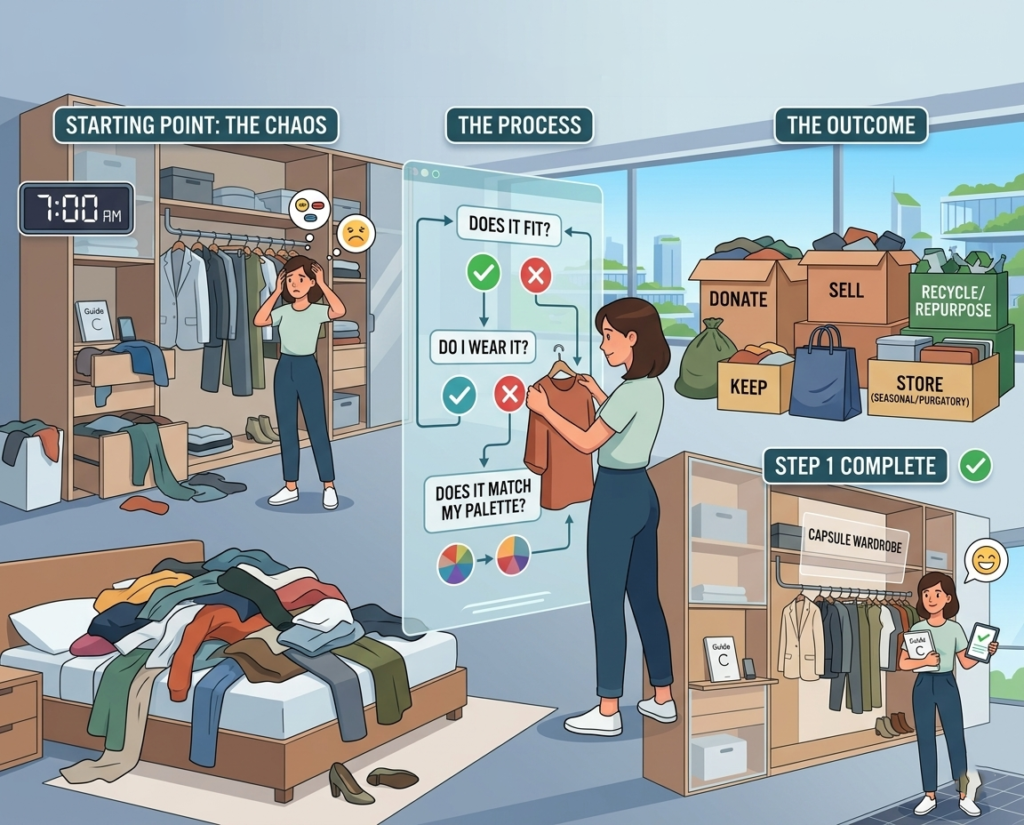
If you are wondering how to start a capsule wardrobe from scratch, the answer is: you don’t. You start with the chaos you already own.
You cannot build a functional minimalist closet without first facing the ghosts of your past purchases. Set aside a couple of hours, put on a killer playlist, and pull absolutely everything out of your closet and drawers. Toss it all onto the bed.
The “Fantasy Self” vs. The “Working Reality”
We all have a “fantasy self.” This is the version of you who attends galas on Tuesdays, does yoga at 5 AM, and regularly wears four-inch stilettos or stiff, three-piece linen suits.
Your fantasy self is bankrupting your closet space. You must dress for the life you actually live, not the one you imagine. If you spend 80% of your time at a desk, commuting, or relaxing on the weekend, your wardrobe needs to reflect those actual, real-world percentages.
The 3-Box Purge System
Sort that massive pile on your bed into three distinct categories. Be utterly ruthless.
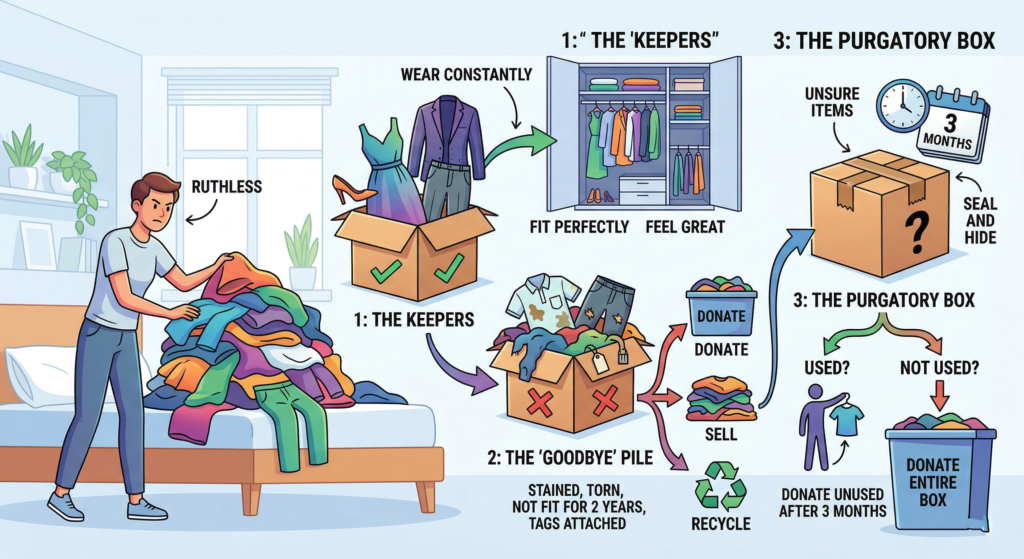
- Box 1: The Keepers. These are items you wear constantly, that fit perfectly right now, and make you feel great. They go back into the closet.
- Box 2: The “Goodbye” Pile. Items that are stained, torn, haven’t fit in two years, or still have tags attached. Donate, sell, or recycle them immediately.
- Box 3: The Purgatory Box. For items you are unsure about. Seal this box and hide it. If you don’t reach for anything in it after three months, donate the whole box without opening it.
Step 2: Architecting Your Signature Color Palette
A capsule wardrobe fails completely if the pieces do not visually coordinate. You need a cohesive color palette to ensure maximum mix-and-match potential.
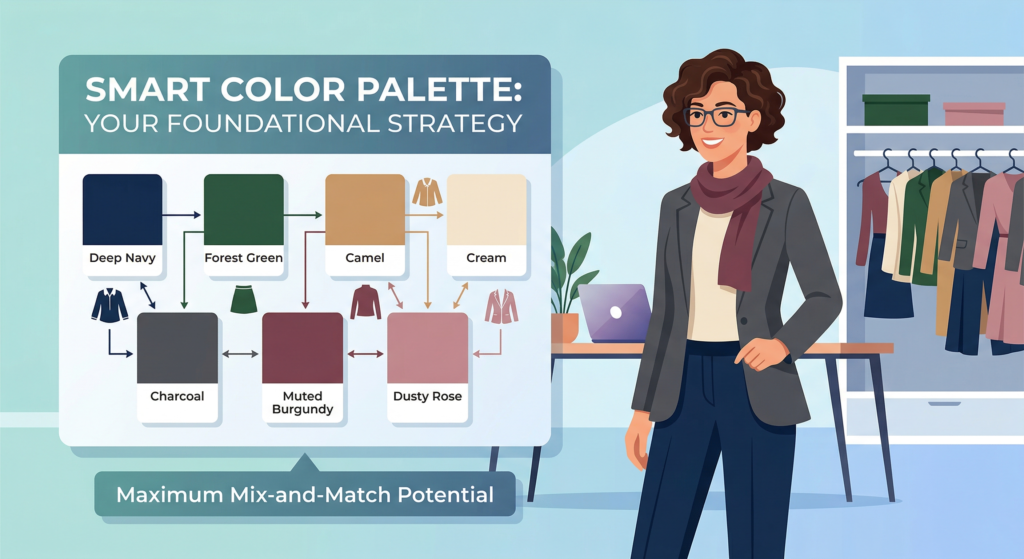
Do not panic—this does not mean you have to wear all beige for the rest of your life. It simply means you need a foundational strategy. A smart color palette is the secret weapon of every stylish working professional.
Mastering the Math of Mixing and Matching
To build a foolproof color palette, follow this simple formula:
- Select 2-3 Base Neutrals: Think navy, black, charcoal gray, beige, or camel. These will make up your trousers, coats, and primary shoes.
- Select 1-2 Light Neutrals: Crisp white, cream, or light gray. These are your foundational t-shirts, button-downs, and layering tanks.
- Select 1-2 Accent Colors: This is where you inject personality. Choose colors that look great with your skin tone, like olive green, burgundy, mustard yellow, or dusty blue.
By sticking to this formula, you can pull any top and any bottom out of your closet in the dark, and they will likely look fantastic together.
Step 3: Defining Your Minimalist Closet Essentials
Now that you have cleared the clutter and picked your colors, it is time to identify the gaps. What are the actual pieces you need?
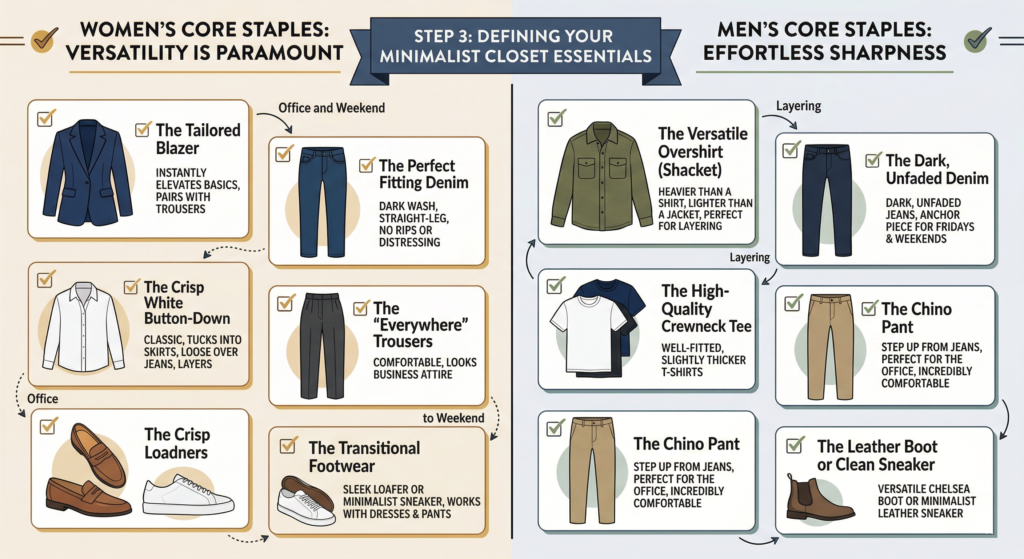
While your exact list will depend on your specific workplace dress code, there are universal minimalist closet essentials that serve as the backbone of a functional wardrobe. These are the workhorse items that transition seamlessly from the office to the weekend.
Core Staples for Women
For the working woman, versatility is paramount. You need items that can survive a chaotic commute but still look sharp in a mid-day meeting.
- The Tailored Blazer: Instantly elevates a basic t-shirt and jeans or pairs perfectly with trousers.
- The Perfect Fitting Denim: One pair of dark wash, straight-leg or bootcut jeans with no rips or distressing.
- The Crisp White Button-Down: A classic that can be tucked into skirts, worn loose over jeans, or layered under sweaters.
- The “Everywhere” Trousers: Comfortable, high-waisted trousers in a dark neutral that feel like sweatpants but look like business attire.
- The Transitional Footwear: A sleek leather loafer or a minimalist white sneaker that works with dresses and pants alike.
Core Staples for Men
For the working man, the goal is effortless sharpness. You want to look intentional without looking like you tried too hard.
- The Versatile Overshirt (Shacket): Heavier than a shirt, lighter than a jacket. Perfect for layering over tees or button-downs.
- The Dark, Unfaded Denim: A slim-straight dark jean is your anchor piece for both casual Fridays and weekend outings.
- The High-Quality Crewneck Tee: Invest in slightly thicker, well-fitted t-shirts in white, black, and navy.
- The Chino Pant: A step up from jeans, perfect for the office, and incredibly comfortable.
- The Leather Boot or Clean Sneaker: A versatile Chelsea boot or a minimalist leather sneaker will cover 90% of your footwear needs.
Step 4: The Economics of Cost-Per-Wear
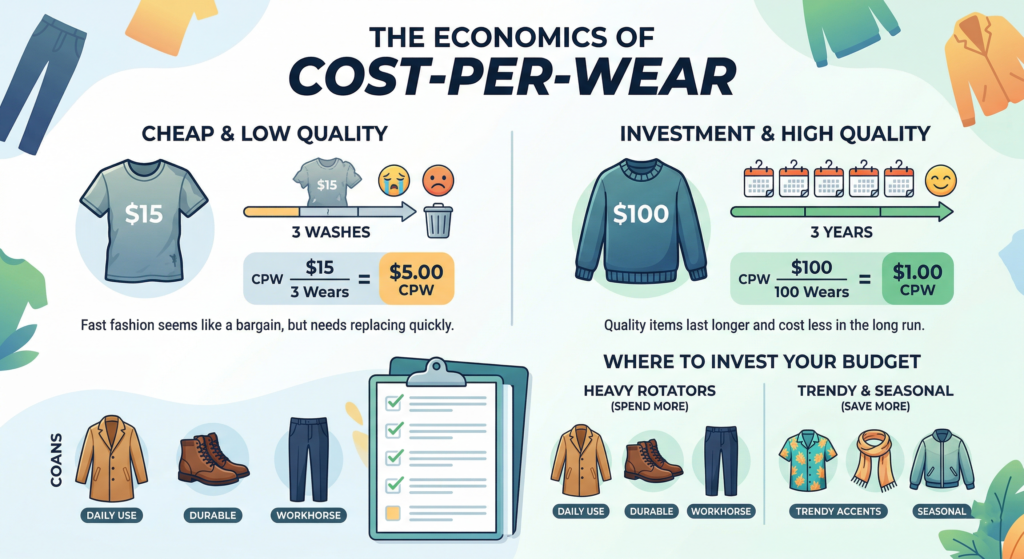
Let’s talk about money. When you buy a $15 shirt that shrinks, warps, and looks terrible after three washes, it is not actually a bargain. You end up replacing it a month later.
In a capsule system, you are buying fewer items, which means those items will be worn more frequently. Therefore, they need to survive the washing machine. Shift your mindset from “how much does this cost?” to “what is the cost-per-wear?”
Investing Where It Counts
If you buy a high-quality, $100 sweater and wear it 100 times over three years, the cost-per-wear is $1.00. If you buy a cheap, itchy $20 sweater and wear it twice before throwing it out, the cost-per-wear is $10.00.
Spend your budget on your heavy rotators: your daily coat, your workhorse trousers, and your daily shoes. You can save money on trendy accent pieces or seasonal layering items.
Step 5: Embracing Sustainable Fashion Trends 2026
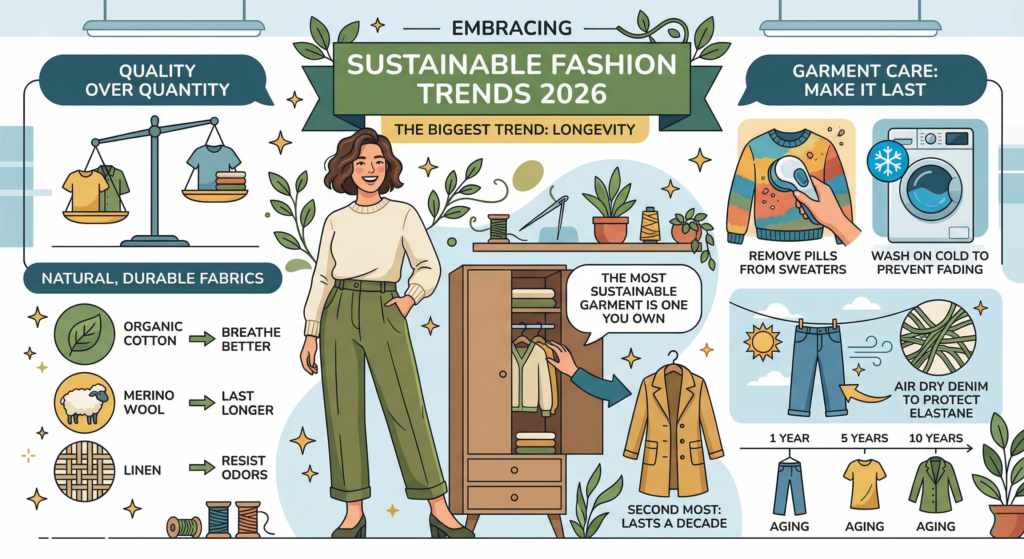
As we look at the sustainable fashion trends 2026 has to offer, the biggest trend isn’t a specific color or cut—it is longevity.
Sustainability is no longer just a buzzword; it is a practical approach to building a wardrobe that lasts. The most sustainable garment is the one you already own. The second most sustainable is the one that will last you for a decade.
Quality Over Quantity
When adding to your capsule, look for natural, durable fabrics. Opt for organic cotton, merino wool, and linen. These materials breathe better, last longer, and do not trap odors like cheap synthetic blends.
Furthermore, take care of your clothes. A minimalist wardrobe requires basic maintenance. Invest in a fabric shaver to remove pills from sweaters, wash your clothes on cold to prevent fading, and air dry your denim to keep the elastane from breaking down.
Step 6: The Outfit Formula Blueprint
The number one fear people have when adopting a minimalist wardrobe is boredom. Will wearing the same items make you look like a cartoon character who wears the same outfit every day?
Absolutely not. The magic lies in “outfit formulas.” These are plug-and-play templates that guarantee a great look without any mental effort.
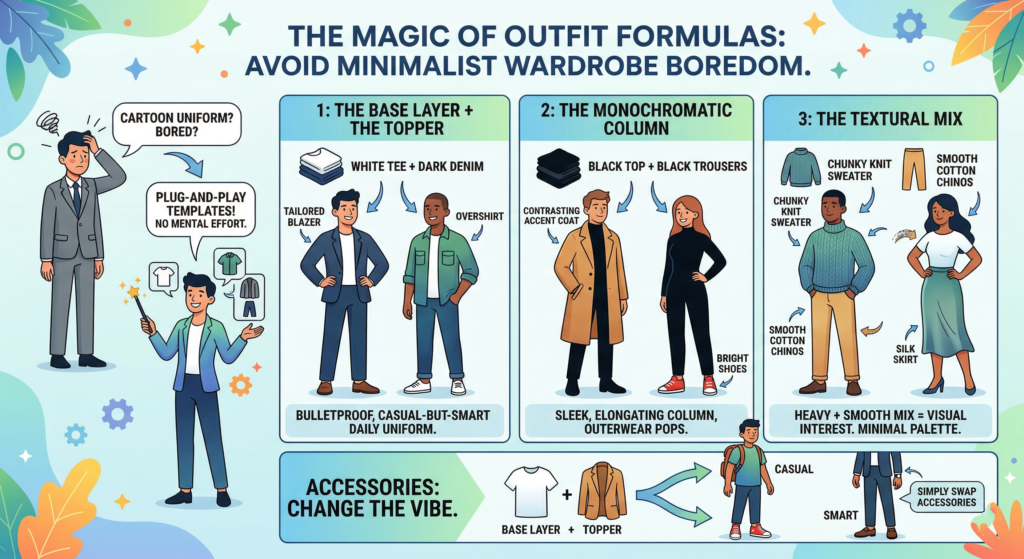
How to Avoid Outfit Boredom
Instead of staring at individual pieces, think in combinations. Here are three universal formulas to memorize:
- The Base Layer + The Topper: (White Tee + Dark Denim) + (Tailored Blazer or Overshirt). This is your bulletproof, casual-but-smart daily uniform.
- The Monochromatic Column: (Black Top + Black Trousers) + (Contrasting Accent Coat or Bright Shoe). Wearing one color underneath creates a sleek, elongating column, allowing your outerwear to pop.
- The Textural Mix: (Chunky Knit Sweater) + (Smooth Cotton Chinos or Silk Skirt). Mixing heavy textures with smooth ones creates visual interest when your color palette is minimal.
Accessories are your best friends here. You can completely change the vibe of the “Base Layer + Topper” formula by simply swapping sneakers and a backpack for leather loafers and a sleek watch.
Step 7: Maintaining the Magic (The One-In, One-Out Rule)
Building the wardrobe is only half the battle. Maintaining it is where the real discipline comes in.
Once your capsule is set, you must protect it from clutter creep. Retail therapy is a tough habit to break, especially after a long week at work. If you find yourself impulse shopping, institute a 48-hour cooling-off period before hitting the checkout button.
The Golden Rule of Minimalism
To keep your closet functioning perfectly, adopt the “One-In, One-Out” rule. For every new item you bring into your closet, an old item must leave.
Bought a new winter coat? Time to donate the old one you haven’t worn since 2023. Picked up a fresh pair of white sneakers? The scuffed, beaten-up pair needs to hit the recycling bin. This rule forces you to critically evaluate every new purchase. If you aren’t willing to part with something old, you don’t love the new item enough to buy it.
A Quick Recap for Your Journey
Getting dressed for work shouldn’t feel like a part-time job. By auditing your current closet, establishing a cohesive color palette, investing in high-quality basics, and relying on proven outfit formulas, you can completely transform your mornings.
You are stepping away from the chaos of fast fashion and embracing a streamlined, sophisticated approach to personal style. A minimalist wardrobe isn’t about deprivation; it is about intentionality. It is about clearing out the noise so you can focus on the things in life that actually matter.
Your Turn to Declutter
You now have the ultimate blueprint to build a highly functional, deeply stylish capsule wardrobe for 2026. The only thing left to do is pull those clothes out of your closet and start the purge.
What is the absolute hardest item for you to get rid of during a closet clean-out? Is it the “skinny” jeans from five years ago, or the graphic tee you’ve had since college? Drop a comment below and let me know your biggest closet struggle!
You May ALso Like
- Transitional Capsule Wardrobe: 7 Powerful Secrets for the Perfect Fit
- The Ultimate Guide to Building a Minimalist Capsule Wardrobe in 2026
- Quiet Luxury on a Budget: 7 High-Street Outfit Formulas
- I Built a 15-Piece Capsule Wardrobe That Creates 50+ Everyday Outfits s
- The “3-Piece Rule”: How to Make Jeans and T-Shirt Outfits Look Instantly Expensive
Disclaimer- Some images in this content were generated using Artificial Intelligence (AI) tools and are for illustrative purposes only.
Disclosure: This post contains affiliate links. If you click through and make a purchase, I may earn a small commission at no extra cost to you.