
Finding Your Core Colors: A Step-by-Step Guide to Choosing Your Wardrobe Palette
When it comes to building a closet that truly works for you, understanding capsule wardrobe color palettes is the absolute foundation of effortless style. Imagine waking up every morning, opening your closet, and knowing intuitively that every single top matches every single bottom. You never have to second-guess if that olive green sweater clashes with those charcoal trousers. This isn’t a fantasy reserved for fashion editors or personal stylists; it is a highly achievable reality born from the strategic application of color theory and personal style analysis.
The concept of a curated closet is beautiful in its simplicity: fewer clothes, better quality, and ultimate versatility. Yet, many people dive headfirst into decluttering without first defining their visual framework. Without a solid understanding of how colors interact with each other—and more importantly, how they interact with your natural complexion—you risk ending up with a minimalist wardrobe that feels disjointed, uninspired, or simply unflattering.
In this comprehensive guide, we will transform how you view your clothing. We will move beyond the overwhelming noise of fleeting micro-trends and fast fashion to help you establish a timeless, personalized system. By the end of this article, you will have the knowledge and the exact step-by-step methodology required to research and choose a wardrobe palette that highlights your best features, reduces decision fatigue, and brings joy back to getting dressed.
Table of Contents
- 1. Why You Need Defined Capsule Wardrobe Color Palettes
- 2. Understanding Color Theory for Fashion
- 3. How to Determine Your Seasonal Color Palette
- 4. Building Your Capsule Wardrobe Color Palettes: A Step-by-Step Guide
- 5. The Psychology Behind Wardrobe Essentials
- 6. Expert External Resources
- 7. Conclusion: The Freedom of a Curated Palette
Why You Need Defined Capsule Wardrobe Color Palettes
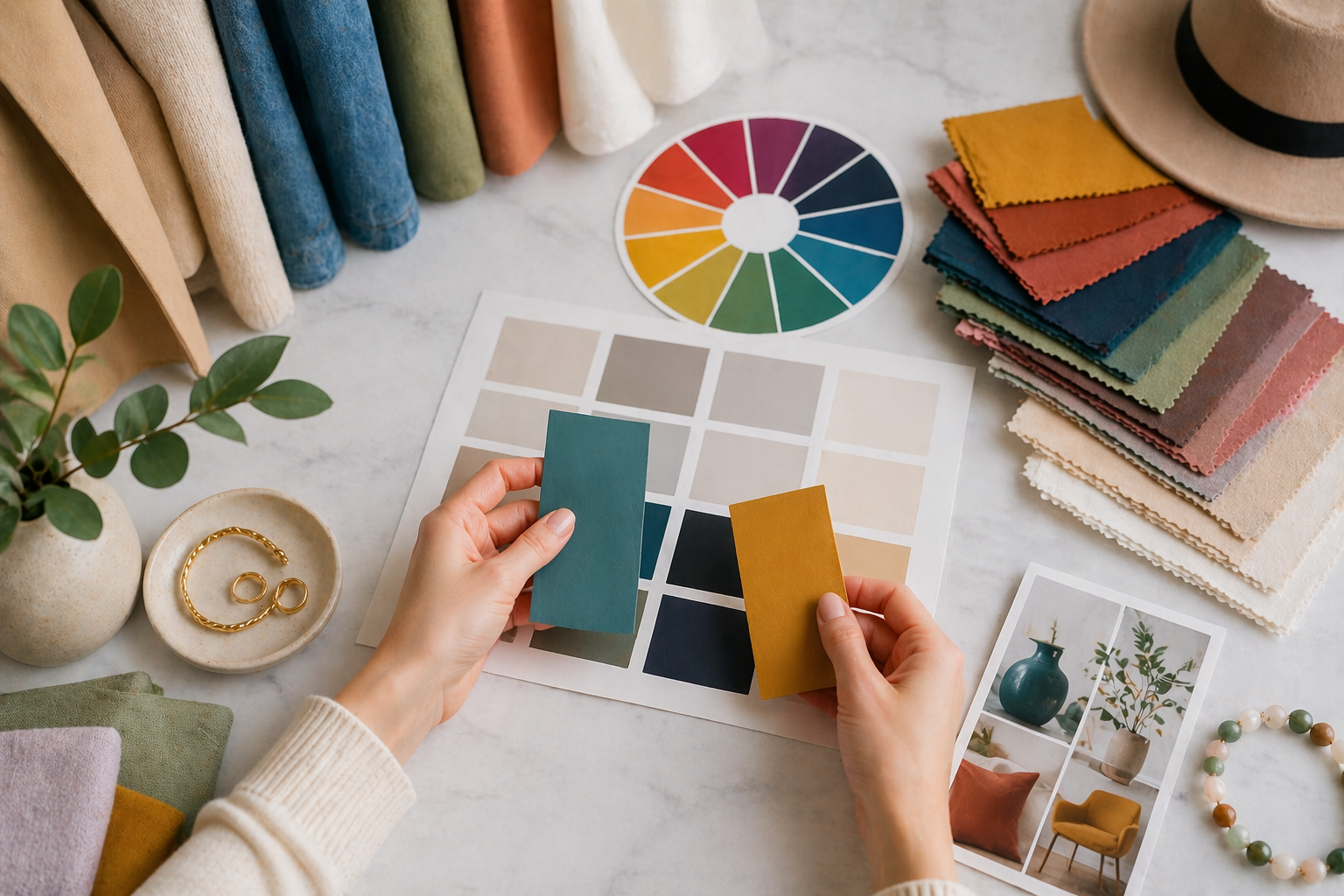
The most common wardrobe dilemma is having a closet full of clothes but absolutely nothing to wear. This paradox occurs when we shop reactively rather than proactively. You buy a beautiful mustard blouse on sale, only to realize you don’t own any skirts, pants, or jackets that complement it. The blouse sits with tags attached for months. Creating defined capsule wardrobe color palettes eliminates this issue entirely.
A cohesive palette serves as a filtering mechanism for your purchasing decisions. When you know exactly which shades belong in your closet, shopping becomes intentional. You save money by avoiding orphan items (clothes that don’t match anything else). You save time by eliminating the daily struggle of outfit coordination. Furthermore, when your clothes harmonize perfectly, you can pack for a two-week European vacation in a single carry-on, knowing every piece can be mixed and matched to create dozens of distinct looks.
Beyond the practical benefits, wearing colors that flatter your natural coloring has a profound impact on your confidence. The right shades can make your skin look radiant, your eyes pop, and your overall appearance more vibrant. Conversely, the wrong colors can cast shadows, highlight blemishes, and make you look tired or unwell. This is why learning to research and choose on your own is a vital life skill for your personal branding and self-presentation.
Understanding Color Theory for Fashion
Before we can dive into analyzing your personal features, we must establish a foundational understanding of color theory as it applies to fashion. Building successful capsule wardrobe color palettes relies heavily on the balance between different categories of colors.
Establishing Neutral Base Colors

Neutrals are the architectural foundation of any functional wardrobe. They are the quiet, unassuming colors that anchor your outfits, allowing your more vibrant pieces to shine without competing for attention. Think of neutrals as the canvas, and your accent colors as the paint.
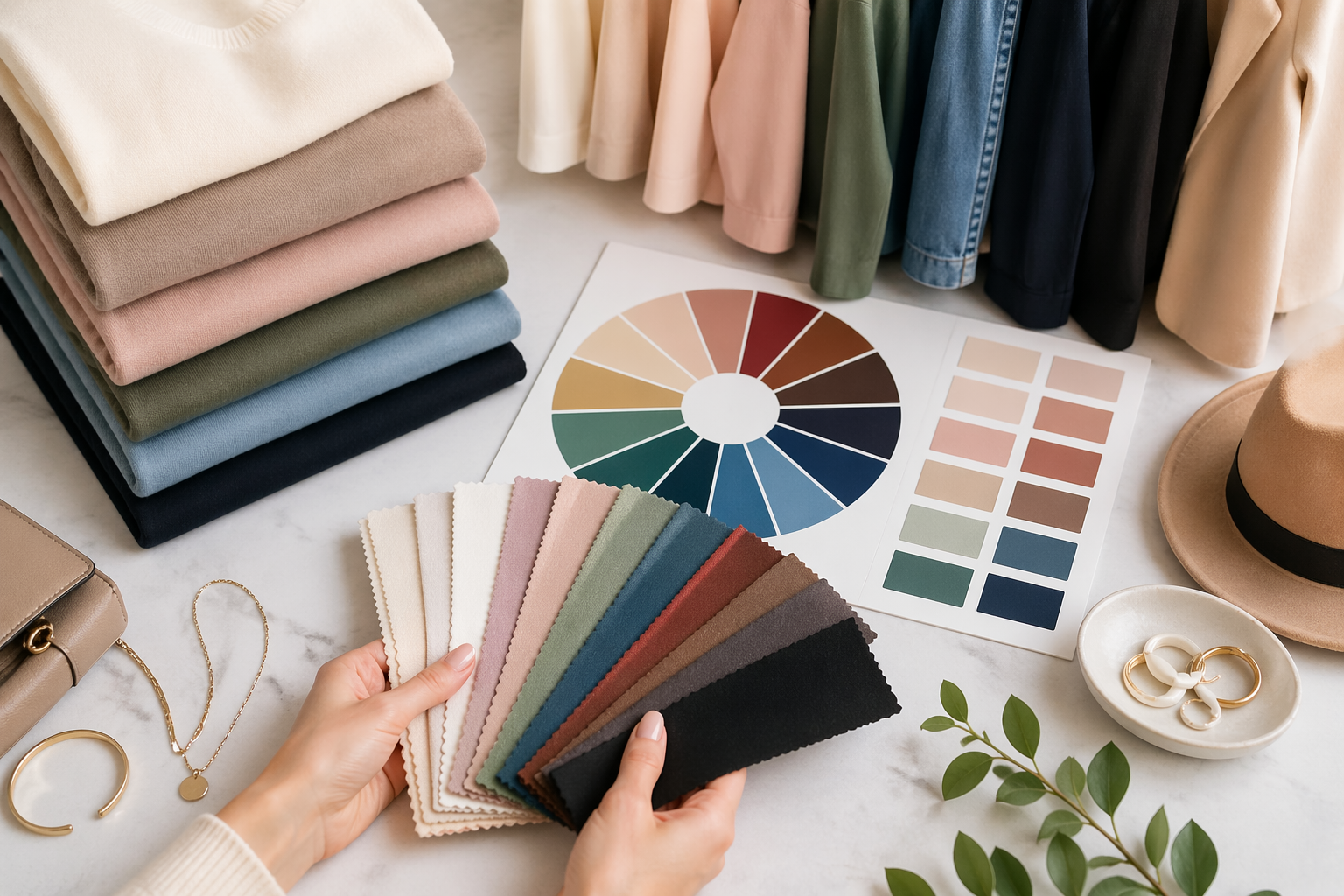
When selecting your neutral base colors, you generally want to choose shades that are highly versatile and appropriate for your lifestyle. Traditional deep neutrals include black, navy blue, charcoal grey, and deep chocolate brown. Traditional light neutrals encompass white, ivory, cream, beige, taupe, and light grey.
A highly effective wardrobe strategy is to choose two dark neutrals and two light neutrals to serve as your primary bases. For example, a professional might choose Navy and Charcoal (dark) alongside Ivory and Camel (light). All your investment pieces—such as winter coats, tailored trousers, blazers, and premium leather footwear—should ideally fall into these neutral categories. Because these colors transcend passing trends, investing in high-quality neutral pieces ensures your wardrobe stands the test of time.
Selecting Your Accent Colors
If neutrals are the foundation, accent colors are the personality. These are the hues that bring life, energy, and individuality to your capsule wardrobe color palettes. Accent colors are typically used for tops, dresses, scarves, bags, and statement jewelry.
To maintain cohesion, stylists recommend choosing a maximum of three to four accent colors per season. These colors should ideally complement each other and, crucially, look excellent when paired with your chosen neutral base colors. For instance, if your base neutrals are navy and camel, beautiful accent colors might include a deep burgundy, a soft blush pink, and a rich forest green.
When you research and choose on your own, consider the concept of tonal dressing (monochromatic outfits) versus contrasting outfits. Choosing accent colors that sit near each other on the color wheel (analogous colors, like blue and green) will create a serene, sophisticated look. Choosing colors opposite each other (complementary colors, like navy and burnt orange) will create a bold, dynamic, and high-energy aesthetic.
Explore More on Wardrobe Foundations
Looking to refine your closet further? Check out our related guides to mastering your personal style:
How to Determine Your Seasonal Color Palette

The secret to looking inherently put together lies in harmony. Your clothing should harmonize with your biological coloring—specifically your skin tone, eye color, and natural hair color. This concept was popularized in the 1980s as “Seasonal Color Analysis” and remains the gold standard for creating personalized capsule wardrobe color palettes today.
Finding Your Skin Undertone
While your skin overtone can change (e.g., getting a tan in the summer, or experiencing temporary redness), your undertone is the permanent, underlying hue beneath the surface of your skin. Undertones generally fall into three categories: Cool, Warm, and Neutral. Olive is a specialized undertone that usually leans neutral-cool but has a distinct greenish-yellow hue.
To accurately determine your undertone, try these professional stylist tests in natural daylight:
- The Vein Test: Look at the veins on the inside of your wrist. If they appear blue or purple, you likely have cool undertones. If they appear green, you have warm undertones (the yellow in your skin mixes with the blue veins to create green). If you can’t tell, or see a mix of both, you likely have neutral undertones.
- The Jewelry Test: Does silver or platinum jewelry make your skin look bright and clear? You lean cool. Does gold jewelry make you look radiant and glowing? You lean warm. If you look equally spectacular in both, you are neutral.
- The White Paper Test: Hold a piece of pure white paper next to your bare, makeup-free face. If your skin looks pink, rosy, or blueish in contrast, you are cool-toned. If it looks yellow, peachy, or golden, you are warm-toned.
The Four Seasons of Color Analysis
Once you know your undertone, you can combine it with the contrast level between your hair, skin, and eyes to find your “Season.” This will dictate the most flattering seasonal color palette for your wardrobe.
- Winter (Cool & High Contrast): Winters have cool undertones and a stark contrast between their skin and hair (e.g., porcelain skin with very dark brown or black hair). They look magnificent in pure, icy, and saturated colors. Think pure white, true black, emerald green, royal blue, and fuchsia. Winters are the only season that truly glows in stark black and white.
- Summer (Cool & Low Contrast): Summers also have cool undertones, but their overall coloring is softer and more blended (e.g., ash blonde hair, soft blue eyes, pinkish skin). Summers look best in muted, cool, and dusty tones. Think charcoal, navy, dusty rose, slate blue, sage green, and lavender.
- Autumn (Warm & Rich): Autumns have warm, golden undertones with rich, earthy coloring (e.g., auburn hair, golden brown eyes, warm beige skin). Their most flattering colors mirror a fall landscape. Think camel, olive green, mustard yellow, burnt orange, rust, chocolate brown, and terracotta.
- Spring (Warm & Clear): Springs possess warm undertones but have a bright, clear, and fresh appearance (e.g., strawberry blonde or golden blonde hair, bright green or blue eyes, peachy skin). They shine in vibrant, warm, and light colors. Think ivory, warm beige, coral, peach, turquoise, kelly green, and sunshine yellow.
“The best color in the whole world is the one that looks good on you.” – Coco Chanel
Building Your Capsule Wardrobe Color Palettes: A Step-by-Step Guide

Now that you understand color theory and have identified your most flattering seasonal hues, it is time to put this knowledge into practical application. Building your capsule wardrobe color palettes is an intentional process. Follow these exact steps to curate a closet that brings you peace and effortless style.
Step 1: Audit Your Current Closet with a Critical Eye
Before buying anything new, you must assess what you already own. Take everything out of your closet. Group your clothing by color. You will likely notice an immediate pattern. Perhaps you own a dozen black sweaters, or a surprisingly high number of olive green t-shirts. This natural gravitation often hints at the colors you inherently feel most comfortable wearing. Keep the items that make you feel confident, and responsibly donate or sell the pieces that are in colors that wash you out or that you never wear.
Step 2: Anchor Your Wardrobe with 2-3 Core Neutrals
Based on your seasonal analysis, choose your foundation. If you are a Winter, your core neutrals might be True Black, Pure White, and Navy. If you are an Autumn, you might choose Chocolate Brown, Camel, and Cream. These colors will make up roughly 50-60% of your wardrobe. They will be used for your heavy-lifting items: trousers, jeans, winter coats, essential knitwear, and basic tees. This ensures maximum interchangeability.
Step 3: Select 3-4 Signature Accent Colors
Your signature colors are where you inject your personality into your capsule wardrobe color palettes. Look at your seasonal palette and pick three to four colors that you absolutely love and that play nicely with your chosen neutrals. These colors should ideally mix well together, too. For instance, a Summer palette might feature Dusty Rose, Slate Blue, and Soft Sage. These tones can be worn together beautifully or paired with a grey or navy neutral base.
Step 4: Incorporate 1-2 Statement Pop Colors (Optional)
If a minimalist wardrobe feels a bit too restrictive, you can add one or two “pop” colors. These are highly saturated, fun colors used sparingly in your wardrobe—perhaps a bold red handbag, a vibrant silk scarf, or a pair of colorful heels. These items take an outfit from basic to incredibly chic without requiring you to commit to buying a whole outfit in that bold color.
Step 5: Define Your Hardware and Metallics
A cohesive wardrobe extends beyond fabric. When planning your palette, decide on your primary metallic tone. This will dictate your jewelry, belt buckles, bag hardware, and shoe details. If you have cool undertones, make silver, white gold, or platinum your primary metallic. If you have warm undertones, opt for yellow gold, brass, or copper. Consistent hardware adds a subtle but incredibly powerful layer of polish to your overall look.
The Psychology Behind Wardrobe Essentials
When finalizing your capsule wardrobe color palettes, it is also fascinating to consider the psychological impact of the colors you wear. Color psychology suggests that the hues we drape on our bodies can influence not only how others perceive us, but how we feel about ourselves throughout the day.
For example, Navy Blue is universally recognized in professional settings as a color of trust, reliability, and authority. It is less severe than black but commands the same level of respect, making it a perfect base neutral for corporate capsules. Earthy Greens (like olive or sage) evoke feelings of balance, harmony, and connection to nature, often helping the wearer feel more grounded. Red, a classic accent color, is associated with energy, passion, and action. Wearing a red power suit or a bold red lip can actually increase your heart rate and make you feel more assertive.
Understanding these psychological cues allows you to dress strategically. If you have a major presentation where you need to project calm confidence, leaning heavily on your blue and neutral palettes is a wise choice. If you are attending a creative networking event, incorporating your brighter, warmer accent colors can make you appear more approachable and dynamic.
Expert External Resources
Building your dream wardrobe is an ongoing journey of education and refinement. To stay updated on how macro-trends in color are evolving globally, and to see how professional designers are pairing tones each season, I highly recommend consulting industry-standard resources. The foremost authority on global color communication is Pantone.
You can review their seasonal predictions and deeply research the exact hex codes and fabric swatches that top designers are utilizing by reading the Pantone Fashion Color Trend Report. This is an excellent resource when you are ready to research and choose on your own, helping you seamlessly blend timeless seasonal color analysis with modern, contemporary styling.
Conclusion: The Freedom of a Curated Palette

Ultimately, the goal of establishing your capsule wardrobe color palettes is not to restrict your creativity, but to liberate it. Constraints actually breed innovation. By narrowing your focus to a specific, highly flattering set of colors, you remove the daily friction of getting dressed.
You will no longer stare blankly into an overflowing closet. Instead, you will open your doors to a curated boutique of garments that you love, that flatter your complexion, and that seamlessly transition from casual weekends to formal meetings. You become the master of your personal style, armed with the knowledge of color theory, an understanding of your unique biological features, and a strategic framework that makes every piece in your wardrobe work tirelessly for you.
Take a weekend to perform your color analysis, audit your current pieces, and slowly begin the transition. It is an investment of time that pays daily dividends in confidence, aesthetics, and mental clarity.