
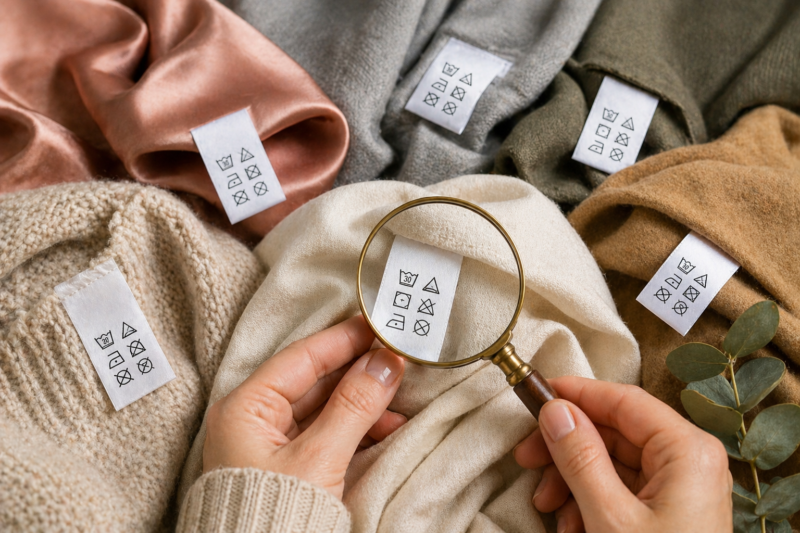
How to Read Clothing Labels: A Complete Guide to High-Quality Fabrics
Clothing labels hold more information about the quality, longevity, and true value of a garment than most shoppers ever realize — yet the majority of us flip past them without a second glance.
Whether you’re standing in a boutique, scrolling through an online listing, or digging through a thrift store rack, learning how to decode clothing labels is one of the single most powerful skills you can develop as a conscious consumer. It separates the impulsive buyer from the intentional dresser, and fast-fashion regrets from wardrobe investments that last for years.
In this guide, we’re going to break down everything you need to know — from understanding fabric composition percentages and care symbols to identifying the subtle markers that distinguish a genuinely high-quality garment from one that merely looks the part. By the time you’re done reading, that little tag sewn into the seam will transform from a scratchy nuisance into your most trusted shopping ally.
Table of Contents
Why Clothing Labels Are the Key to Smarter Shopping
The modern clothing label is a regulatory requirement in most countries, meaning brands are legally obligated to disclose certain information on every garment they sell. In the United States, the Federal Trade Commission (FTC) mandates that clothing labels include the fiber content, country of origin, manufacturer or dealer identity, and care instructions. This isn’t optional — and knowing what each element means gives you a measurable edge as a shopper.
But beyond legal compliance, clothing labels tell a story. They reveal the priorities of the brand that made the garment: did they choose natural fibers that breathe and age gracefully, or did they opt for synthetics that keep costs low at the expense of feel and longevity? A label is, in many ways, a brand’s confession — and once you know how to read it, you’ll find it very hard to unsee the truth it tells.
What Information Must a Clothing Label Include?
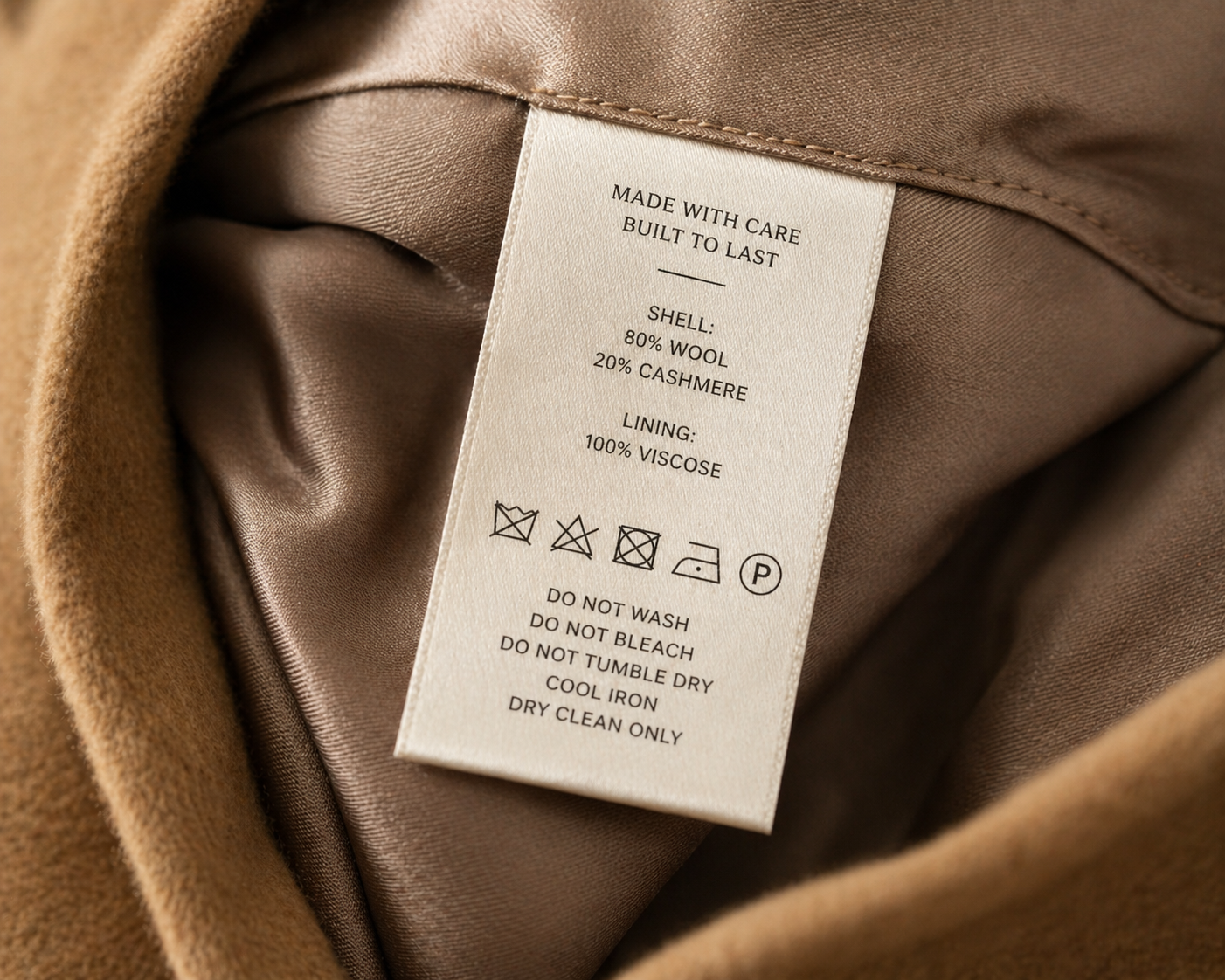
A compliant clothing label in the US must list four core elements: fiber content (listed by percentage in descending order), country of origin (where the garment was manufactured), the RN or WPL number (which identifies the responsible company), and care instructions (either written or using standardized symbols). Some brands also include additional details like the specific weave or finish, the thread count for linens, or sustainability certifications — all of which are worth paying attention to.
When a brand volunteers information beyond the bare minimum — like specifying “100% long-staple Egyptian cotton” rather than simply “100% cotton” — that extra transparency is usually a positive signal. It suggests the brand is proud of their materials and confident that specificity will impress their customer rather than overwhelm them.
Decoding Fabric Composition: What the Clothing Label Percentages Really Mean
The fabric content section of a clothing label lists all fibers present in the garment, ordered from the highest percentage to the lowest. A label reading “78% Cotton, 20% Polyester, 2% Elastane” tells you immediately that cotton is the dominant fiber — but the presence of polyester raises questions about texture, breathability, and long-term wear. Understanding what these percentages mean in practice is the core skill of any discerning shopper.
In general, higher percentages of natural fibers — cotton, wool, linen, silk, cashmere — correlate with better breathability, longevity, and comfort. However, this isn’t an absolute rule. A small addition of elastane (1–5%) improves stretch and shape retention without significantly impacting the hand feel. Merino wool blended with a small percentage of nylon can produce a sock or knitwear that resists pilling far better than 100% merino alone. The key is understanding why a synthetic is present, not simply penalizing any synthetic content reflexively.
The Problem With Ambiguous Fiber Listings on Clothing Labels
Not all fiber listings on clothing labels are equally informative. “Cotton” is a broad category — it encompasses everything from ultra-fine Egyptian Giza cotton to rough open-end spun cotton used in budget basics. The same is true of wool, which ranges from scratchy lambswool to the buttery softness of ultra-fine Merino.
When a brand uses a specific designation — “Supima Cotton,” “100% Merino Wool,” “Mongolian Cashmere” — they’re inviting comparison and staking a claim to quality. When the label simply reads “cotton” or “wool” with no further specification, the fabric could be almost anything within that category.
If you’re shopping online and can’t physically feel the garment, these label distinctions matter even more. Look for brands that list their fabric weight in GSM (grams per square meter) for wovens, or the micron count for wools and cashmeres. A cashmere sweater listed at 14–15 microns is noticeably softer than one at 19 microns — and a brand that shares that data is one that takes its materials seriously.
High-Quality Fabric Types: What Every Clothing Label Should Have
Now that you understand how to read the composition section of a clothing label, let’s go deeper into the specific fibers that signal genuine quality.
Not all fabrics are created equal, and the difference between a $50 linen shirt and a $200 linen shirt often comes down to the specific variety of linen, the yarn weight, and the finishing process — details that well-curated clothing labels often hint at, if not state outright.
Here is a breakdown of the most important high-quality fabric categories and what to look for on the label:
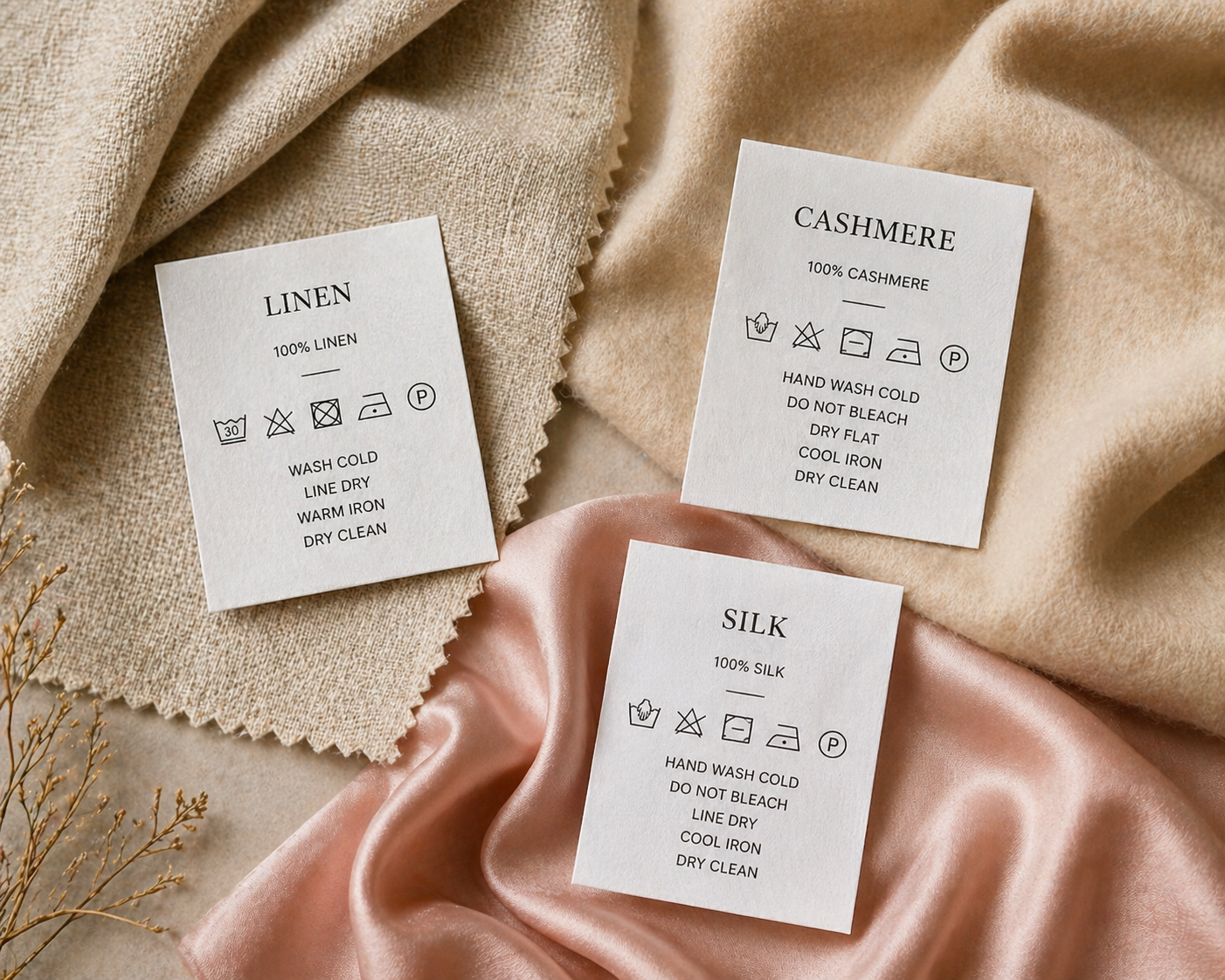
- 100% Long-Staple Cotton (Supima, Egyptian, Pima): Long-staple cotton fibers produce a smoother, stronger, and more lustrous yarn than short-staple alternatives. When a clothing label specifies “Supima” (a trademarked designation for American-grown Pima cotton) or “Egyptian cotton,” it’s signaling superior softness and durability. Look for thread counts of 200+ in bedding-equivalent terminology, and fabrics that feel smooth rather than fuzzy when new.
- Pure Merino or Fine Lambswool (under 18.5 microns): Wool micron count is the single most important indicator of softness and itch-factor. The lower the micron count, the finer the fiber. Standard wool sits around 20–24 microns; Merino is typically 15–24 microns; and the finest Merino and Vicuña wools can dip below 14 microns. A clothing label that specifies “superfine Merino” or lists a micron count is a strong indicator of a brand that truly understands its materials.
- Cashmere (Grade A, Mongolian or Scottish-spun): Cashmere is graded by fiber length and diameter. Grade A cashmere — long fibers, low micron count — pills less and maintains its softness wash after wash. A clothing label that simply reads “100% Cashmere” without further qualification could mean anything. Brands that specify the origin (Mongolia, Kashmir) or grade, or that offer a pill-resistance guarantee, are giving you more to work with.
- Linen (European Flax — OEKO-TEX or Masters of Linen certified): European flax, grown primarily in France, Belgium, and the Netherlands, is widely considered the world’s finest linen fiber. Look for “100% European Flax” designations or certifications like Masters of Linen on the clothing label. Linen’s quality also shows in its GSM weight: lightweight summer linen runs 100–180 GSM; heavier, more durable linen sits at 200–300 GSM.
- Silk (Momme weight 12–30): Silk is measured in momme (mm), a unit of weight per area. The higher the momme, the heavier and more durable the silk. Charmeuse used in a quality blouse should be at least 16–19mm; a truly luxurious silk might run 22–30mm. A clothing label listing “100% Mulberry Silk” with a momme weight is a sign of transparency and quality.
Fabric Blends: When Clothing Labels Signal Smart Engineering vs. Cost-Cutting
Not every fabric blend is a red flag. In fact, some of the world’s most enduring performance textiles are purpose-built blends: Ventile (tightly woven long-staple cotton), Gore-Tex (PTFE membrane laminated to natural or synthetic wovens), and Viyella (55% merino, 45% cotton) are all blends with long track records of excellence. The difference between a smart blend and a cost-cutting blend comes down to intent and execution.
When reading clothing labels on blended fabrics, ask yourself: does the synthetic component serve a functional purpose (stretch, durability, moisture management), or does the high synthetic percentage simply exist to reduce production cost? A 95% cotton, 5% elastane jersey has a clear functional rationale. A 50% polyester, 50% cotton shirt in a non-performance context is probably cotton-polyester because it’s cheap to produce and wrinkle-resistant, not because the polyester is adding any meaningful performance benefit for the wearer.
Care Symbols Decoded: How to Preserve Clothing Label Instructions and Your Investment
The care instruction section of a clothing label is, for many shoppers, the most intimidating — a row of cryptic symbols that look like an instruction manual for a piece of IKEA furniture from the future. But the international care labeling system (ISO 3758) is actually quite logical once you learn the visual grammar. Each symbol belongs to one of five categories: washing, bleaching, drying, ironing, and professional care (dry cleaning). Within each category, additional marks like dots, lines, and X’s modify the base instruction.

The Five Core Care Symbol Categories on Every Clothing Label
- Washing (Tub Symbol): A plain tub means machine wash; a hand in the tub means hand wash only; an X through the tub means do not wash. Dots inside the tub indicate temperature: one dot = cold (30°C/86°F), two dots = warm (40°C/104°F), three dots = hot (60°C/140°F). Lines under the tub indicate a delicate or permanent press cycle.
- Bleaching (Triangle): An empty triangle means any bleach is safe; a triangle with diagonal lines means only non-chlorine bleach; an X through the triangle means do not bleach. For high-quality natural fibers — especially silk and fine wool — the “do not bleach” symbol is almost universal.
- Tumble Drying (Circle in Square): A circle in a square indicates tumble drying is safe; dots inside indicate heat levels. A plain X through the symbol means air dry only. For cashmere, fine wool, and structured garments, air drying flat is almost always recommended — heat and tumbling are the fastest routes to shrinkage and distortion.
- Ironing (Iron Symbol): Dots indicate temperature — one dot for delicate (silk, synthetic), two for medium (wool, polyester blends), three for cotton and linen. An X through the iron means do not iron; an X through steam lines under the iron means iron without steam.
- Professional/Dry Cleaning (Circle): A plain circle means dry clean; letters inside indicate the specific solvent the cleaner should use (P = perchloroethylene safe, F = petroleum-based solvent only). An X through the circle means do not dry clean.
Understanding care instructions does more than protect individual garments — it changes how you shop. When you find a beautiful cashmere sweater at a great price but notice it requires dry cleaning, factor the long-term cleaning cost into the true price of that garment. Conversely, a well-constructed wool coat labeled “spot clean and steam” is actually a very low-maintenance investment piece that can go seasons between professional cleanings. The clothing label is giving you total cost of ownership information — you just have to know how to read it.
Building a Wardrobe You’ll Actually Keep: Putting Clothing Label Knowledge Into Practice
Learning to read clothing labels is not about becoming an obsessive fabric snob — it’s about making deliberate choices with your money, your wardrobe, and ultimately your environmental footprint. Every garment you buy and keep for years rather than months is a small but meaningful act against the throwaway culture that drives so much of the fashion industry’s waste. And that starts with information: the information printed, sewn, or woven right into the garment you’re holding.
Here’s a practical framework to take with you on your next shopping trip. First, flip to the clothing label before you try anything on. Note the fiber content — is it predominantly natural, or synthetic? Does the brand specify quality designations, or keep it vague? Next, check the care symbols: can you realistically care for this garment at home, or will it require dry cleaning every few uses?
Finally, feel the fabric against the back of your hand, not your palm — the back of the hand is more sensitive and will reveal pilling, roughness, or that tell-tale synthetic slickness that no clothing label truth can completely hide. Put all three signals together, and you’ll make better purchases almost every single time. Your closet — and your wallet — will thank you for it.
4 Comments
I never realized how much information is hidden in a clothing label until reading this. Breaking down fabric composition and care symbols really makes shopping feel more intentional and less like guesswork.
This guide really reinforced how much there is to learn from those little tags we often overlook. I especially appreciated the breakdown on fabric composition and care symbols — it’s made me more intentional about my purchases and less reliant on surface-level impressions. Understanding these details has already helped me spot garments that are worth the investment over fast-fashion options.
[…] Protect Your Investments: Spilled a drink on your favorite shirt? Know exactly how to clean it by learning How to Read Clothing Labels: Best Proven Secrets. […]
[…] Protect Your Clothing Investments: High-end workwear needs to be treated with respect. Unlock the secrets of longevity in How to Read Clothing Labels: Best Proven Secrets. […]