
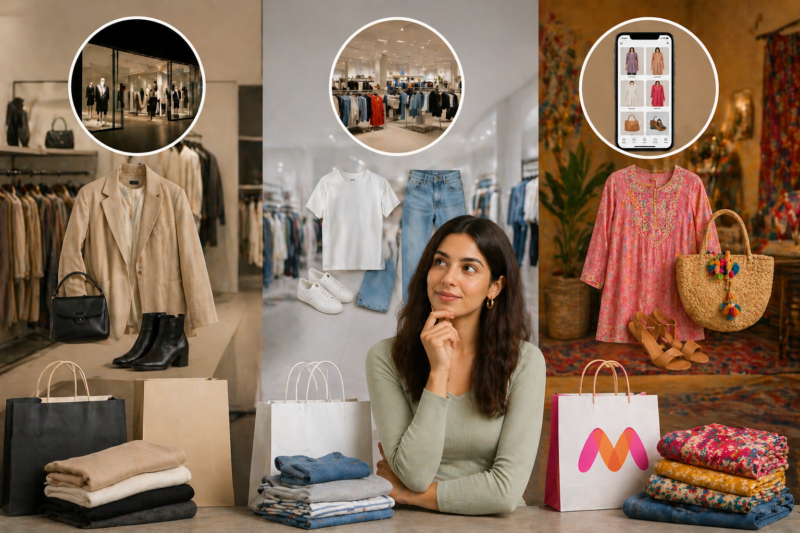
Zara vs H&M vs Myntra: Which One Actually Gives You Better Value?

When it comes to upgrading your wardrobe in 2026, Myntra has fundamentally changed how we shop from our smartphones, but the real question is how it measures up against the brick-and-mortar legacy of Zara and H&M. The fast fashion and online retail landscape has evolved drastically. We are no longer just looking for the cheapest t-shirt; we are looking for cost-per-wear, fabric longevity, trend relevance, and a seamless shopping experience.
In this comprehensive guide, we are diving deep into the ultimate retail showdown: Zara vs H&M vs Myntra. We will break down their supply chains, pricing strategies, fabric qualities, and return policies. The concept of “Better value” is highly subjective—what is valuable to a college student looking for weekend outfits is vastly different from what is valuable to a working professional building a smart-casual office capsule.
By the end of this deep dive, you will know exactly where to spend your hard-earned money to ensure your closet is stylish, durable, and economically sound. Let’s dissect the giants of the fashion industry to see who truly deserves a place in your wardrobe.
Table of Contents
- Zara: The High-Fashion Fast-Lane
- H&M: The Global Basics Powerhouse
- Myntra: The Aggregator with the Homegrown Advantage
- Zara vs H&M vs Myntra: The Head-to-Head Comparison
- Level Up Your Wardrobe: Essential Guides
- Sustainability: The Ultimate Test of Better Value
- The Final Verdict: Who Wins the Better Value War?
Zara: The High-Fashion Fast-Lane
Owned by the Spanish retail conglomerate Inditex, Zara is the undisputed king of translating runway trends to the high street in record time. While other brands plan their collections months in advance, Zara operates on a hyper-responsive model, designing, producing, and distributing new garments to stores within weeks of spotting a trend.

Does Zara Offer Better Value for Your Money?
When we discuss whether Zara offers better value, we have to look at aesthetics versus longevity. Zara excels at tailoring. Their blazers, wide-leg trousers, and structured coats often mimic the silhouettes of luxury design houses like Celine or Saint Laurent. If your definition of better value is looking incredibly chic and “expensive” without spending designer prices, Zara is unmatched.
However, the catch is often the fabric. Zara frequently relies heavily on polyester, viscose, and acrylic blends to keep costs down while maintaining those sharp silhouettes. A stunning blazer might look impeccable on the rack, but if it is 100% polyester, it won’t breathe during an Indian summer, reducing its practical value.
The Zara Value Breakdown
- The Pros: Cutting-edge design, excellent structured tailoring, sophisticated color palettes, and immediate access to global trends.
- The Cons: Higher price points compared to competitors, inconsistent fabric quality, and garments that often require delicate care (dry cleaning) to maintain their shape.
- Best For: Statement pieces, office wear, outer layers, and trend-focused footwear.
H&M: The Global Basics Powerhouse
Hennes & Mauritz (H&M) represents the Swedish approach to fast fashion: democratic, accessible, and vast. H&M’s strategy is volume. They offer everything from gym wear and maternity clothes to evening dresses and home goods. Their pricing is famously aggressive, making fashion accessible to almost every demographic.
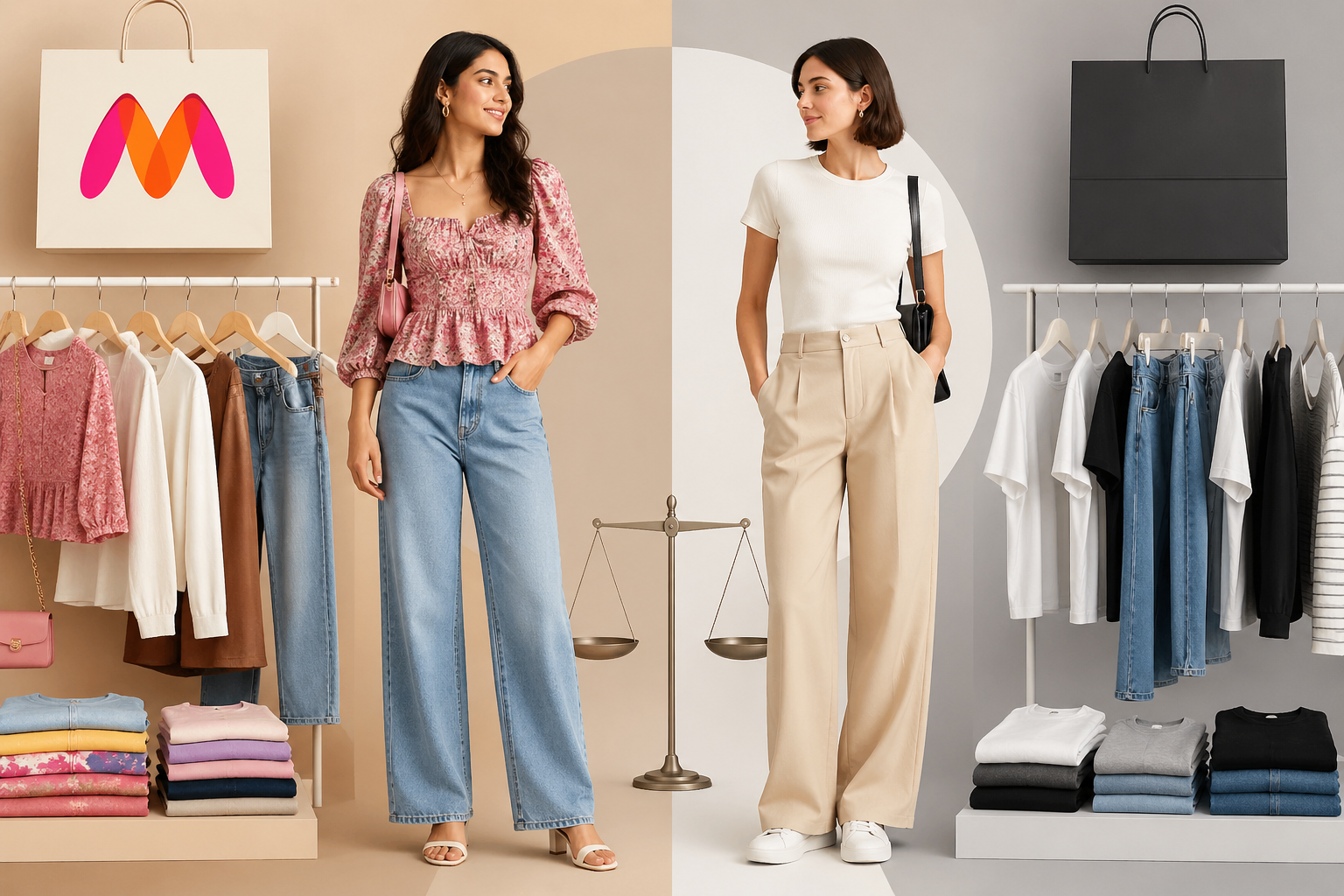
Is H&M Better Value Than Zara and Myntra?
H&M shines brightest in two specific areas: foundational basics and their “Premium Selection” line. For simple cotton t-shirts, basic hoodies, socks, and simple denim, H&M provides exceptional utility for the price. You can stock up on everyday essentials without causing a dent in your bank account.
Where H&M truly offers better value, however, is when you look past their standard divided line and explore their premium offerings. H&M frequently utilizes 100% linen, premium cotton, and even cashmere in their higher-tier collections. If you are a savvy shopper who reads clothing labels, you can find incredible natural fiber garments at H&M for a fraction of what a boutique would charge.
“Value isn’t just a low price tag; it is the intersection of how much you paid, how often you wear it, and how it makes you feel. A $20 shirt you wear once is terrible value compared to a $60 shirt you wear fifty times.”
The H&M Value Breakdown
- The Pros: Unbeatable prices for basics, excellent designer collaborations, strong pushes towards organic cotton, and a massive variety of styles.
- The Cons: The lowest-tier items can lose shape quickly after a few washes, and the store experience can often feel overwhelming due to sheer volume.
- Best For: Layering pieces, basic tees, trend-experimentation on a strict budget, and kidswear.
Myntra: The Aggregator with the Homegrown Advantage
This brings us to the digital giant. Unlike Zara and H&M, which are single-brand entities (mostly), Myntra is a massive fashion e-commerce aggregator. It hosts thousands of domestic and international brands—including H&M itself. But Myntra’s true power in the “better value” debate comes from its massive portfolio of in-house private labels like Roadster, Mast & Harbour, HRX, and Dressberry.

Why Myntra Dominates the Better Value Conversation
If you are looking for localized fashion that understands the Indian climate, sizing, and aesthetic preferences, Myntra is incredibly hard to beat. Because they control the manufacturing of their private labels and don’t have the overhead of physical global flagship stores, they can offer highly competitive pricing.
Furthermore, Myntra’s ecosystem is built on the concept of deals. Between their ‘End of Reason Sale’ and constant dynamic discounting, the sticker price on Myntra is rarely what you actually pay. When you combine deep discounts with a highly generous return and exchange policy, the risk of buying clothes drops to near zero.
The Myntra Value Breakdown
- The Pros: Massive selection across all price points, aggressive discounting, unmatched convenience (try and buy), and private labels that offer great quality-to-price ratios.
- The Cons: Quality can be a gamble depending on the third-party brand, and the sheer paradox of choice can lead to decision fatigue.
- Best For: Activewear (HRX), casual denim (Roadster), ethnic wear, and overall wardrobe building from the comfort of your couch.
Zara vs H&M vs Myntra: The Head-to-Head Comparison
To truly determine who provides better value, we need to pit these three retail titans against each other in the categories that actually matter to consumers in 2026.
1. Fabric Quality and Durability Comparison
If you are looking for natural fabrics (linen, pure cotton, wool), H&M’s Premium line usually wins the cost-to-fabric ratio. Zara often prioritizes structure over natural fibers, utilizing synthetics to hold complex shapes. Myntra offers the widest spectrum; you can buy a cheap synthetic top or a pure cotton premium shirt from a heritage brand on the same app. For pure durability in basics, Myntra’s in-house brands like Roadster have proven to withstand the test of time remarkably well.
2. Pricing Tiers: Who Actually Gives Better Value?
Zara is the most expensive of the three. You are paying a premium for the design aesthetic and the speed at which they bring trends to market. H&M is the king of low-cost entry points, making it perfect for students. Myntra, however, wins the “perceived value” category. Because of their coupon infrastructure and sales events, purchasing a premium brand on Myntra often feels like a massive victory for your wallet.
3. Trend Relevance: Zara, H&M, or Myntra?
Zara dictates the high-street trends. If you want a piece that looks like it walked off the runway in Paris last week, Zara is your only stop. H&M follows closely but waters the trends down to appeal to a broader, more casual audience. Myntra excels at standardizing trends—taking what works globally and adapting it to everyday, wearable, and culturally relevant fashion for the Indian market.

Level Up Your Wardrobe: Essential Guides
Understanding where to shop is only the first step. To truly maximize your wardrobe’s potential and ensure every rupee spent translates to impeccable style, dive into our core Outfit Anatomy curriculum:
Sustainability: The Ultimate Test of Better Value
In 2026, we cannot discuss fast fashion without addressing the environmental elephant in the room. Better value is no longer just about personal economics; it is about planetary impact. The fashion industry is responsible for a massive percentage of global carbon emissions and wastewater.
H&M has been the most vocal about sustainability, heavily promoting their garment collection initiatives and “Conscious” lines. However, critics often point out that the sheer volume of their production counteracts these efforts. Zara’s parent company has pledged to use 100% sustainable fabrics by 2030, though their hyper-fast production cycle encourages a throwaway culture.
Myntra, being an aggregator, sits in a unique position. They have introduced “Myntra For Earth,” a dedicated store featuring eco-friendly brands. Furthermore, e-commerce arguably consolidates physical footprint, though the logistics of delivery and returns carry their own carbon cost. To truly understand the global impact of these retail models, we highly recommend reading the comprehensive Business of Fashion’s sustainability reports, which provide unfiltered data on the industry’s eco-metrics.
The Final Verdict: Who Wins the Better Value War?
So, between Zara, H&M, and Myntra, which one actually gives you better value? The answer depends entirely on your shopping persona.
- Choose Zara if: Your primary goal is high-end aesthetics, sharp tailoring, and keeping up with cutting-edge trends. You view clothing as a statement and are willing to pay a premium for design, even if the fabric isn’t always top-tier.
- Choose H&M if: You are building a wardrobe on a strict budget, need to stock up on everyday basics, or have an eye for finding hidden gems in their Premium Selection.
- Choose Myntra if: You want the ultimate Better value. Myntra wins the overall utility award. The combination of deep discounts, a vast array of brands, the comfort of home try-ons, and strong private labels makes it the most economically sound choice for the modern shopper. You can buy your H&M basics, a high-end watch, and homegrown denim all in one cart.
Ultimately, the best value comes from buying intentionally. A cheap shirt from H&M is a waste of money if it sits in your closet, while an expensive blazer from Zara is a bargain if you wear it twice a week for three years. Shop smart, read the labels, and let your personal style dictate the platform, not the other way around.
Shop Smarter, Dress Better.
Don’t let the fast-fashion industry dictate your style. Join the Outfit Anatomy newsletter to receive weekly, data-driven style guides, exclusive brand teardowns, and actionable advice to build a wardrobe that lasts.
Subscribe to the Newsletter