
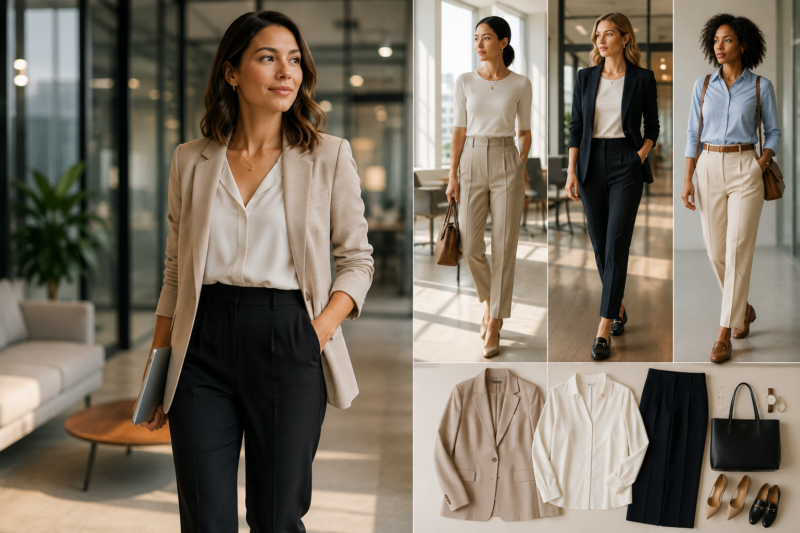
What Does “Business Casual” Actually Mean for Women in 2026?

Navigating the rules of Business Casual can feel like trying to solve a puzzle with missing pieces, especially in today’s evolving workplace. If you have ever stared blankly into your closet at 7:00 AM, holding a blazer in one hand and a pair of dark denim jeans in the other, wondering if the combination will earn you a nod of approval or a quiet meeting with HR, you are absolutely not alone. The definition of workplace attire has fractured, shifted, and rebuilt itself multiple times over the last decade.
In 2026, the corporate landscape has fully embraced the hybrid model. With professionals splitting their time between the comfort of their home offices and the collaborative environments of downtown high-rises, our wardrobes have been forced to adapt. We no longer want to suffer in rigid, heavily structured suits that restrict our breathing. Yet, showing up to a client pitch in the same yoga pants you wore for your morning meditation is still a profound misstep. We are in the era of elevated comfort, “quiet luxury,” and intentional dressing.
This comprehensive, 2000+ word guide is your ultimate blueprint for deciphering the modern dress code. We will tear down the outdated rules of the past, clearly define the boundaries of modern office attire, and give you actionable, stylish outfit formulas. Whether you are walking into a conservative law firm on a “casual Friday” or joining a creative tech startup, this is how you master the art of looking effortlessly professional.
Table of Contents
- The Evolution of Business Casual for Women in 2026
- Decoding Office Attire: What is Business Casual?
- Business Casual vs. Smart Casual: Knowing the Difference
- Building Your 2026 Business Casual Wardrobe
- Seasonal Transitions for Women’s Workwear
- Footwear for Business Casual Environments
- Level Up Your Wardrobe: Essential Guides
- Do’s and Don’ts of Corporate Fashion 2026
- Conclusion & Next Steps
The Evolution of Business Casual for Women in 2026
To understand what is acceptable today, we have to look at how we got here. Ten years ago, the dress code was a rigid binary. You either wore a matching two-piece suit (business formal) or you wore slacks with a modest, uninspired cardigan (the classic, slightly frumpy definition of casual). The fashion industry largely ignored the working woman’s desire for personal expression in the office.

From Stiff Suits to Relaxed Professional Outfits
The global shift to remote work fundamentally altered our tolerance for physical discomfort. When professionals returned to the office, they brought their expectations of comfort with them. The fashion industry responded brilliantly. We saw the rise of the “corporate core” aesthetic and the mainstreaming of “quiet luxury”—a trend focusing on high-quality fabrics, impeccable tailoring, and minimalist designs without flashy logos.
Today, the focus has shifted from *what* you are wearing to *how* it fits and *what* it is made of. A pair of tailored, wide-leg trousers made from a sustainable Tencel blend, paired with a high-quality cashmere knit, commands just as much respect as a traditional worsted wool suit. The modern era is about blending authority with approachability. For a deeper understanding of how top-tier executives are dressing, Harper’s Bazaar’s authoritative guide on work outfits highlights how luxury designers are redefining boardroom style.
Decoding Office Attire: What is Business Casual?
Let’s establish a firm definition. Business Casual is a dress code that blends traditional corporate wear with more relaxed, everyday clothing. It is professional enough to attend a surprise meeting with the CEO, but comfortable enough to sit at your desk for eight hours without feeling restricted.

The Core Elements of Women’s Workwear
The secret to mastering this dress code is the “High-Low Balance.” If you wear a highly structured, formal item (like a sharp, double-breasted blazer), you must balance it with a softer, more casual item (like a high-quality cotton t-shirt or a relaxed, wide-leg pant). Conversely, if you are wearing a casual bottom (like premium dark denim, where permitted), you must elevate the top half with a silk blouse and a structured jacket.
“The modern professional wardrobe is not about hiding your personality behind uniform grey wool; it is about leveraging tailoring, color, and texture to project competence and confidence.”
It is crucial to note that this dress code heavily depends on your specific industry. A law firm in New York will have a vastly different interpretation of “casual” than a tech startup in Silicon Valley. When in doubt, it is universally better to be slightly overdressed on your first day than to arrive underdressed.
Business Casual vs. Smart Casual: Knowing the Difference
These two terms are frequently used interchangeably by HR departments, which leads to massive confusion. However, in the world of fashion, there is a distinct line separating the two, and crossing it at the wrong time can impact your professional image.

Navigating Corporate Fashion in a Hybrid World
Smart Casual leans closer to your weekend wardrobe. It is fashionable, trendy, and relaxed. Think fashion-forward denim, bold printed blouses, stylish jumpsuits, and even pristine luxury sneakers. It is the dress code for creative agencies, media companies, and trendy Friday office parties.
Business Casual, on the other hand, retains a foundational layer of traditional corporate authority. Denim is generally discouraged unless it is exceptionally dark, un-distressed, and specifically approved by company culture. Shoulders are typically covered, skirts hover near the knee, and footwear is generally closed-toe. It is about appearing ready for business at a moment’s notice, just without the matching suit and tie. If you are aiming for a promotion, you want to dress for the job you want, and leaning into the “business” side of the equation is always a safer bet.
Building Your 2026 Business Casual Wardrobe
Now that we have defined the rules, let’s build the actual closet. Creating a highly functional wardrobe is about investing in versatile, high-quality staples that can be mixed and matched endlessly. You do not need a closet bursting with clothes; you need a strategic, curated capsule. Below are the absolute essential pieces you need to secure your daily rotation.
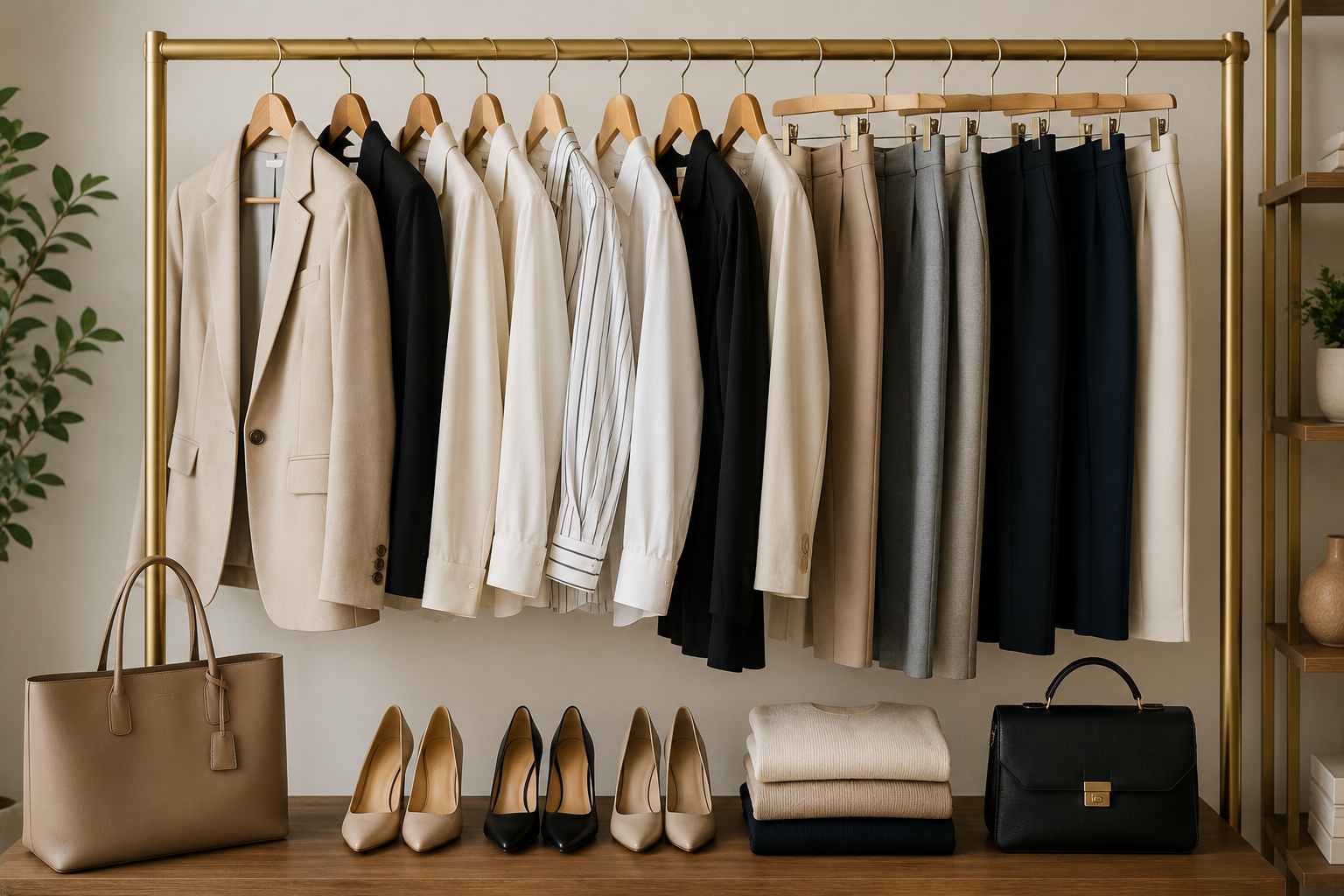
Essential Work Appropriate Clothing Pieces
1. The Oversized (But Tailored) Blazer
The fitted, shrunken blazers of the 2010s are gone. In 2026, the silhouette is slightly oversized, featuring a relaxed drape with a strong shoulder. This piece is the ultimate magic wand for women’s workwear—it instantly formalizes anything you wear underneath it.
How to Style It: Drape a camel or houndstooth blazer over a simple silk camisole and tailored trousers. Roll the sleeves slightly to expose your wrists, which adds a touch of effortless cool and breaks up the boxy shape.
2. The Wide-Leg Tailored Trouser
Skinny pants and tight pencil skirts have been replaced by the fluid, elegant movement of the wide-leg trouser. High-waisted with deep pleats, these pants offer incredible comfort while maintaining an incredibly sharp, architectural look.
How to Style It: The rule of proportions dictates that if your bottom half is voluminous, your top half should be fitted. Pair wide-leg trousers with a tucked-in, fine-gauge turtleneck or a fitted bodysuit to create a stunning hourglass silhouette.
3. The Premium Silk or Satin Blouse
Cotton button-downs can sometimes feel too stiff or reminiscent of a school uniform. A silk or high-quality satin blouse brings a touch of femininity and luxury to your professional outfits. It catches the light beautifully and drapes elegantly over the body.
How to Style It: Choose jewel tones (emerald, sapphire, deep burgundy) or classic neutrals (champagne, ivory). Wear it tucked into a midi skirt or trousers. Ensure the neckline is modest—a subtle V-neck or a pussy-bow tie is perfect.
4. The Ribbed Knit Midi Dress
For those mornings when you simply cannot be bothered to match a top and a bottom, the midi dress is your savior. A ribbed knit dress made from a dense, high-quality fabric smooths the figure without being overly tight or revealing.
How to Style It: The length is crucial—it should hit below the knee or mid-calf. Pair it with a structured leather belt to define the waist, and finish the look with knee-high leather boots in the winter or sleek loafers in the spring.
5. The “Office-Approved” Dark Denim
If your office allows jeans, you must treat them as trousers. This means absolutely no rips, fading, raw hems, or light washes. You are looking for a deep indigo or pitch-black wash with a straight or wide-leg cut.
How to Style It: Never wear denim with a casual t-shirt to the office. Elevate the jeans with a structured blazer, a crisp button-down shirt, and polished leather footwear. The goal is to make people look twice to realize you are actually wearing jeans.
Seasonal Transitions for Women’s Workwear
Maintaining a professional aesthetic becomes incredibly challenging when battling extreme weather. A true master of Business Casual knows how to adapt their wardrobe for the seasons without losing their style authority.
Summer Office Attire
Summer is the most dangerous season for dress code violations. It is tempting to wear sundresses and strappy sandals when the thermometer hits 35°C (95°F), but these are strictly weekend garments. Instead, rely on fabric technology. Swap your wool trousers for linen-blends or lightweight cotton poplin. Opt for sleeveless blouses, but keep a lightweight, unlined blazer at your desk to throw on for meetings. Avoid shorts entirely, no matter how tailored they are, unless you work in a highly progressive creative industry.
Winter Corporate Fashion
Winter requires strategic layering to look chic rather than bulky. Invest in a high-quality wool or cashmere overcoat—your puffer jacket should be left in the coat closet, not worn around the office. Layer fine merino wool turtlenecks under your slip dresses or silk blouses. Embrace opaque black tights paired with midi skirts, and utilize the structural elegance of knee-high leather boots to stay warm while looking impeccably sharp.
Footwear for Business Casual Environments
Your shoes can make or break an outfit. They are the anchor of your entire look. In the past, women were often expected to endure the pain of stilettos to look professional. Thankfully, the 2026 landscape celebrates footwear that provides podiatrist-level support wrapped in luxury aesthetics.

Finishing Your Professional Outfits
The cornerstone of a modern work wardrobe is the leather loafer. Whether you prefer a sleek, minimalist almond-toe or a chunky, lug-sole Prada-inspired design, the loafer communicates intelligence and practicality. If you prefer height, trade the stiletto for a sturdy block heel or a chic kitten heel, which offers stability for commuting and long days at a standing desk.
The Great Sneaker Debate: Can you wear sneakers in a business environment? The answer is a heavily conditional yes. They must be pristine, minimalist leather sneakers (think brands like Common Projects, Veja, or Axel Arigato). No neon colors, no massive logos, and absolutely no mesh running shoes. They should be styled intentionally with a suit or tailored trousers, never as an afterthought.
Level Up Your Wardrobe: Essential Guides
Building a flawless office rotation is part of a larger stylistic journey. To ensure your closet is cohesive, versatile, and built to last, continue your education with our curated Outfit Anatomy guides:
Do’s and Don’ts of Corporate Fashion 2026
Even with the best wardrobe pieces in your arsenal, execution is everything. Keep these universal rules in mind before you head out the door.

- DO Invest in a Steamer: The difference between looking sloppy and looking expensive is often just wrinkles. A quick steam transforms a $30 blouse into a $300 blouse.
- DON’T Show Excessive Skin: A deep plunging neckline or a mini skirt that rides up when you sit down distracts from your professional competence. Keep it elegant and modest.
- DO Tailor Your Clothes: An inexpensive suit tailored to fit your body perfectly will always look better than an ill-fitting designer suit. Hem your trousers to hit exactly at the top of your shoes.
- DON’T Wear Distracting Accessories: Skip the loud, clanking bangles or oversized hoop earrings. Opt for minimalist, geometric jewelry—a delicate gold chain or simple pearl studs—that complements rather than overwhelms your look.
- DO Upgrade Your Bag: Ditch the canvas tote bag you got for free at a conference. Carry a structured leather tote or a sleek top-handle bag that can securely hold your laptop and documents while elevating your overall aesthetic.
Conclusion & Next Steps
Mastering the Business Casual dress code is not about restricting your personal style; it is about channeling your creativity into a framework that commands respect and projects authority. The modern workplace is dynamic, and your wardrobe should reflect that agility. By investing in high-quality staples—the perfect blazer, the flawlessly tailored trouser, and the supportive yet stylish loafer—you eliminate morning decision fatigue and step into the office feeling unstoppable.
Remember, the goal of great office wear is to make you feel so confident and comfortable that you stop thinking about your clothes entirely, allowing you to focus 100% of your energy on crushing your career goals. Take inventory of your closet today, donate the pieces that no longer serve your professional image, and start building the wardrobe of the executive you are destined to become.
Elevate Your Career and Your Closet.
Don’t let wardrobe panic slow down your professional momentum. Join the Outfit Anatomy newsletter to receive weekly, data-driven style guides, exclusive brand reviews, and actionable advice to build a workwear capsule that works as hard as you do.
Subscribe to the Newsletter